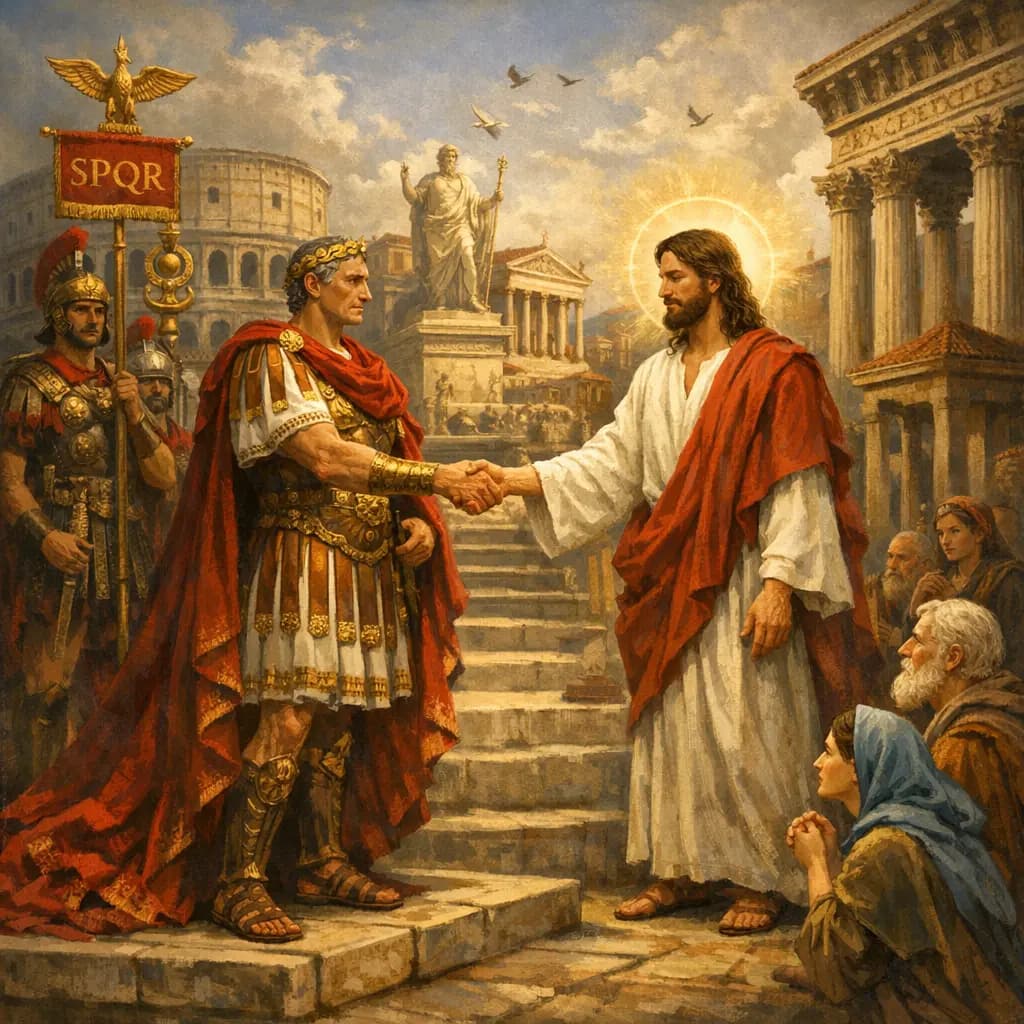
Ancient Rome began as a small city in Italy
A vivid portrait of the literary and cultural flowering under Augustus: the motives behind his patronage of arts and letters, the revival of classical forms and Roman pride, the major poets (Virgil, Horace) and historians (Livy), the flourishing of libraries and public reading, and the erotic rebellion in the poetry of Tibullus, Propertius, and especially Ovid, whose exile marked the end of this brilliant era.
A narrative of the era of the emperors after Augustus to the end of the Flavian dynasty: Tiberius, Caligula, Claudius, Nero, the three emperors of 69, Vespasian, Titus, and Domitian; focusing on personal motivations, administrative reforms, wars, court corruption, and the transition from constitutional government to absolute monarchy, along with the cultural and moral influences of the period.
Will Durant in the third volume of The Story of Civilization examines the principles of literary style, correction of writing, and the lives of two prominent poets of the Roman Empire. Quintilian teaches eloquence and moral literary standards, Statius composes with tenderness and kindness, while Martial depicts everyday Roman life through sharp and realistic epigrams.
Will Durant describes the economic life of the Roman Empire under the early emperors. Agriculture shifted toward large estates and specialized crops like olives and wine, while industry remained mostly small-scale and household-based. Trade flourished across the Mediterranean thanks to excellent roads, ships, and engineering marvels such as aqueducts and harbors. Bankers and social classes supported a complex but ultimately unbalanced economy.
Will Durant in the third volume of The Story of Civilization examines Roman art, which was largely derivative of Greek models yet achieved originality in engineering, realism, and arched architecture. Romans despised living artists but revered past masterpieces. Architecture reached grandeur through vaults, domes, and vast baths; realistic sculpture and wall painting advanced; and the imperial capital became a magnificent, crowded metropolis.
Will Durant describes daily life, education, family relations, dress, food, holidays, and the rise of new Eastern cults in Rome from Augustus to Domitian. The old Roman stock changed through low birth rates among the elite, immigration, and slavery. Education emphasized rhetoric and Greek culture. Women gained freedom but family virtues persisted among the respectable. Luxury increased in dress, homes, and banquets. Public spectacles, theaters, music, and games dominated leisure. Traditional religion declined while Eastern mystery cults, especially those of Isis and Mithras, gained popularity among the masses.
Will Durant describes the era of Nerva, Trajan, Hadrian, Antoninus Pius, and Marcus Aurelius in the third volume of his Story of Civilization. The period began with the Senate choosing the emperor and continued with the principle of adoption. Trajan expanded borders through the conquest of Dacia and war with Parthia. Hadrian stabilized the empire through extensive travels and administrative reforms. Antoninus Pius ruled with justice and peace. Marcus Aurelius, the philosopher-emperor, faced hard wars against the Germans and the plague but preserved his Stoic virtues.
Will Durant portrays the second century as Rome’s golden age under the “Five Good Emperors,” yet already shadowed by seeds of decline. Tacitus and Juvenal bitterly condemned tyranny and moral decay, while Pliny the Younger offered a gentler picture of Roman virtue and philanthropy. Culture gradually weakened as philosophy turned inward and eastern religions spread. Marcus Aurelius embodied Stoic resignation amid endless wars and plague. Commodus’s chaotic reign ended the Antonine peace, revealing the empire’s deepening economic and social fractures.
Will Durant describes Italy during the Roman Empire as far more than the corrupt capital of Rome. The provinces and regions of Italy—Latium, Etruria, Campania, and northern Italy—were filled with thriving cities, active ports, beautiful villas, and vibrant urban life. Pompeii, with its wall inscriptions, houses, and artworks, offers a vivid glimpse into everyday Roman existence. Cities built public baths, theaters, libraries, and held games through private donations and state support. Wealthy citizens generously funded public welfare. This was the peak of Italy’s prosperity before the economic and cultural decline of the third century.
Will Durant explains how Rome civilized the West by organizing the provinces and Italy into a network of thriving cities connected by roads, trade, and law. Italy flourished with agriculture, industry, and urban life, exemplified by Pompeii’s vibrant daily existence. Africa, Spain, Gaul, and Britain were transformed through Roman engineering, agriculture, and culture, creating prosperous cities despite underlying exploitation. However, the empire’s failure to fully civilize the tribes beyond the Danube and Rhine allowed barbarian pressures to grow, contributing to Rome’s eventual decline.
Will Durant describes Greece under Roman rule as a land treated with apparent respect yet exploited through wars, plunder, and heavy taxation. Rome granted many cities autonomy and the status of "free cities," but conflicts and Roman greed led to poverty and decline. Plutarch emerges as the era's moral voice, comparing Greek and Roman heroes. Athens remained a vibrant cultural center, while philosophy shifted toward mysticism and resignation. Epictetus offered Stoic teachings with Christian-like warmth, and Lucian used sharp satire to mock gods, philosophy, and human folly. Ultimately, Greek thought moved from skepticism back toward faith and submission.
Will Durant describes the cultural revival in the eastern Roman provinces, particularly Egypt, Syria, and Asia Minor. Roman Egypt thrived as a granary and industrial center under strict imperial control. Philo of Alexandria attempted to reconcile Jewish faith with Greek philosophy through allegorical interpretation, influencing early Christian theology. Science advanced through Ptolemy’s astronomy and geography, Hero’s mechanical inventions, and Galen’s medicine. Poetry flourished modestly, while prose saw figures like Strabo, Dio Chrysostom, and the revival of oratory. Eastern mystery cults, including those of Cybele, Isis, Mithras, and others, spread widely, offering emotional depth, purification, and hope of immortality, paving the way for Christianity.
