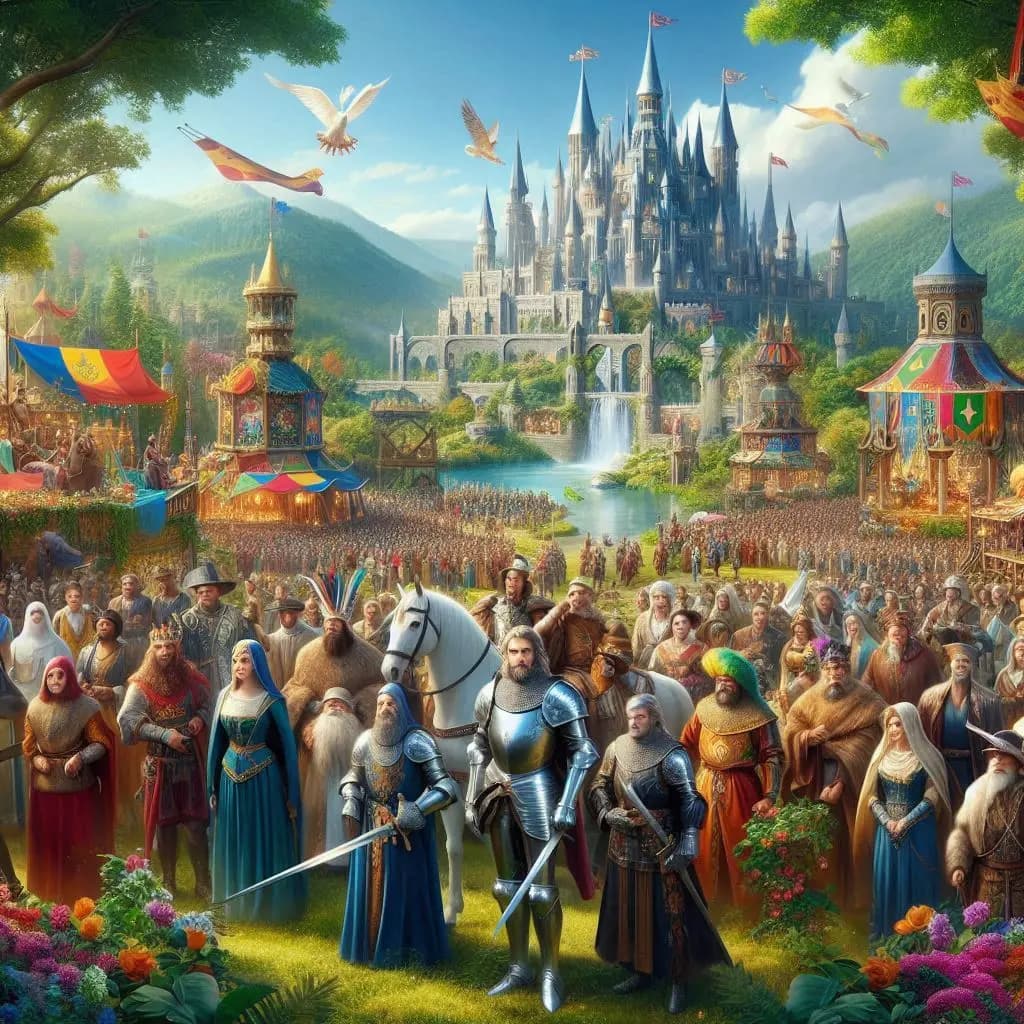
Exploring Eras and Pivotal Events
In the fifteenth century Florence became the wealthiest city in Italy through trade, banking, and industry. The Medici family, led by Cosimo de’ Medici, gained political power and supported art, literature, and philosophy, causing the Renaissance to flourish. Cosimo maintained peace through a balance of power policy and turned Florence into the cultural capital of Europe.
After Cosimo's death, Piero de' Medici inherited power but faced challenges due to illness and weak management. Lorenzo de' Medici assumed leadership at age twenty, governed with financial and political skill, and preserved peace in Italy through a balance-of-power policy. He was a great patron of art, literature, and philosophy, elevating Florence to its cultural peak.
After Lorenzo de' Medici's death, the weak and incapable Piero failed to preserve the family's popularity. Girolamo Savonarola, with fiery sermons condemning moral corruption, the clergy, and the government, established a republic. After his execution in 1498, the unstable republic persisted until the Medici, with foreign help, regained power in 1512 and again in 1530.
Under the Visconti and Sforza dynasties, Milan became a brilliant center of the Renaissance, rivaling Florence in culture and power. Ludovico il Moro and Beatrice d'Este fostered art, literature, and learning while navigating complex politics. The era saw magnificent architecture like the Certosa di Pavia and the Duomo, but ended in turmoil with foreign invasions and the fall of the Sforza.
Leonardo da Vinci, born in 1452 near Florence, is recognized as the most fascinating figure of the Renaissance. He was an artist, inventor, scientist, and engineer who worked in Milan, Florence, and France. His famous works include The Last Supper, the Mona Lisa, and anatomical studies. His life, blending art and science, symbolizes the comprehensive genius of the Renaissance.
Returning to Tuscany reveals Florence drawing talented individuals from its surroundings while leaving exceptional geniuses elsewhere. Luca bought autonomy from Emperor Charles IV and remained free until Napoleon. Its eleventh-century cathedral, repeatedly repaired, became a fine art museum with works by Jacopo della Quercia and Matteo Civitali. Pistoia preferred Florentine rule over freedom. Pisa, once wealthy enough to turn marble into churches, lost its port to silt and fell under Florentine control. San Gimignano preserved its medieval towers and became a national monument. Arezzo and Borgo San Sepolcro nurtured Piero della Francesca, whose frescoes and portraits marked the peak of Umbrian art. Signorelli advanced anatomical study in Orvieto. Siena's factional strife limited its art to painters like Sodoma and Beccafumi. Perugia's turbulent rule under the Baglioni still fostered painting by Perugino and his school.
Mantua was a land of good fortune during the Renaissance, enjoying stability under a single ruling family free from revolutions, court murders, and coups. Vittorino da Feltre established an exemplary school in the "House of Joy" and developed an educational method that cultivated the ideal "complete man" of the Renaissance. Andrea Mantegna created magnificent frescoes in the Ducal Palace and produced The Triumph of Caesar. Isabella d'Este, the first lady of Mantua, transformed the court into one of the most brilliant centers of literature, art, and politics through her taste and intelligence.
مانتوا در سراسر رنسانس تنها یک خانواده فرمانروا داشت و از آشوب انقلاب، قتلهای درباری و کودتا در امان ماند. ویتورینو دا فلتره مدرسهای نمونه در «خانه شادی» تأسیس کرد و با روش تربیتی خود «مرد کامل» رنسانسی را پرورش داد. آندرئا مانتنیا فرسکوهای باشکوهی در کاخ دوکی آفرید و پیروزی قیصر را خلق کرد. ایزابلا د استه، بانوی اول مانتوا، با ذوق و کیاست خود مرکز ادب، هنر و سیاست شد و مانتوا را به یکی از درخشانترین دربارهای ایتالیا تبدیل کرد.
Ferrara in the early sixteenth century was one of the most important centers of the Renaissance alongside Venice and Rome. The Este family ruled the city for nearly four centuries and turned its court into one of the most splendid in Europe. This article explores the political history of the Este dynasty, the flourishing of art and literature in Ferrara, and the prominent role of poets such as Ludovico Ariosto.
Venice in the late fourteenth century overcame crises with Genoa and Padua to become one of the most powerful states in Italy. This island republic expanded its territory across northeastern Italy, the Dalmatian coast, and Mediterranean islands, amassing enormous wealth. Its intelligent aristocratic government, powerful navy, global trade, and brilliant school of painting turned Venice into the Queen of the Adriatic and one of the major centers of the Renaissance.
Correggio became one of the brightest centers of Renaissance art thanks to the paintings of Antonio Allegri (Correggio). Bologna flourished with its university, churches, and artists. Under the rule of Federico and Guidobaldo della Rovere, Urbino became a symbol of refined culture and courtly elegance. In the south, Naples with Alfonso the Magnanimous’s patronage of humanists, and Sicily with its multicultural heritage, formed part of the rich cultural diversity of Renaissance Italy.
The Great Papal Schism (1378–1417) divided the Catholic Church into two, and later three, rival popes, turning it into a political tool of European powers. The Councils of Pisa, Constance, and Basel attempted to resolve the crisis and establish the supremacy of general councils over the papacy. In the end, Martin V and Eugene IV, with political skill and the support of Emperor Sigismund, ended the schism, but at a heavy cost that severely damaged papal authority.
