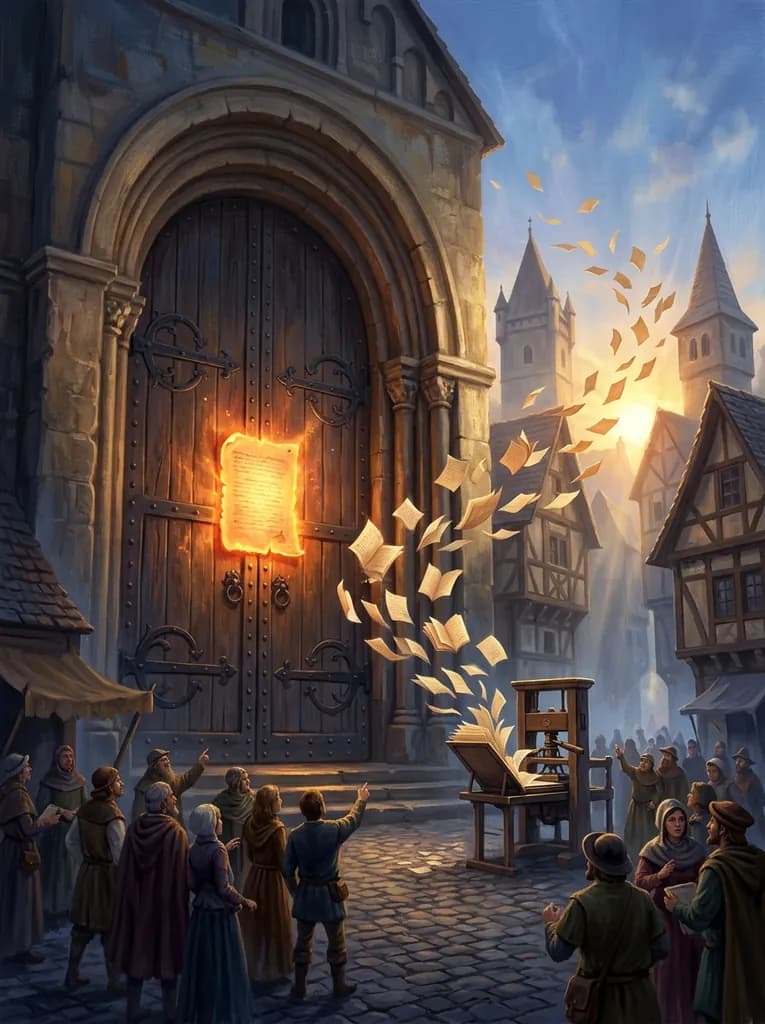
A period in European history marked by efforts to reform the Christian Church
Durant on the Spanish Church's independence, the widened powers of the Inquisition, the small Spanish Protestant circles of Seville and Valladolid, the autos-da-fé of 1559, and the long trial of Archbishop Carranza that ended Spanish Protestantism.
Durant on Charles V's last years at the monastery of Yuste, his illness and death in 1558, a sober judgment of his reign, and the two forces, national states and religious revolution, that reshaped Europe in his time.
Durant on the Russian lands under the Golden Horde, the character, family life and faith of the Russians, the role of the Church and monasteries, icon painting and architecture, and Ivan III's Italian builders of the Kremlin.
Durant on the rise of Moscow from Daniil to Ivan III, the Battle of Kulikovo, Moscow's Tatar-style autocracy, the conquest of Novgorod and the end of Tatar overlordship in 1480, and the Byzantine inheritance Ivan claimed.
Durant on Ivan IV's boyar-ridden childhood, his coronation as tsar, the reforms of the early years, the conquest of Kazan and Astrakhan, the English trade route, the costly Livonian War, Prince Kurbsky's flight, and the creation of the Oprichnina in 1565.
The second half of Ivan IV's reign: the Novgorod massacre of 1570, the decay of the Russian economy, the conquest of western Siberia, the clash with the Church, St Basil's Cathedral, the tsar's death in 1584 and a balanced verdict on his legacy.
How Islamic civilization survived the Mongol catastrophe, and how the Ilkhans, Ghazan Khan's reforms at Tabriz and the vizier and historian Rashid al-Din turned conquerors into patrons of learning.
The life and poetry of Hafez (c. 1320–1389), the Persian poet of Shiraz who served several rulers, refused the lure of foreign courts, mixed devotion with irreverence and became a symbol of Iranian culture.
The origins of the Tatars, Timur's rise from a bandit of Kesh to ruler of Samarkand, his campaigns in Iran, his clash with Tokhtamysh and the Golden Horde, and the march toward Russia and India.
Timur's campaigns in Anatolia, Syria and Iraq, his victory over Sultan Bayezid at Ankara in 1402, Clavijo's portrait of Samarkand and its court, Timur's character, his death in 1405 and the fate of his empire.
The cultural flowering of Timur's successors at Herat and Samarkand, the end of the dynasty and the rise of the Mughals, followed by the history of Mamluk Egypt, its economy, the splendor of Cairo, its mosques and its crafts.
The obscure origins of the Turks, Osman's small emirate, the conquest of Bursa and the Anatolian cities under Orhan, the expansion under Murad I and Bayezid I, Bayezid's captivity under Timur and the recovery under Mehmed I and Murad II.
