Revisiting Epochs and Ideologies

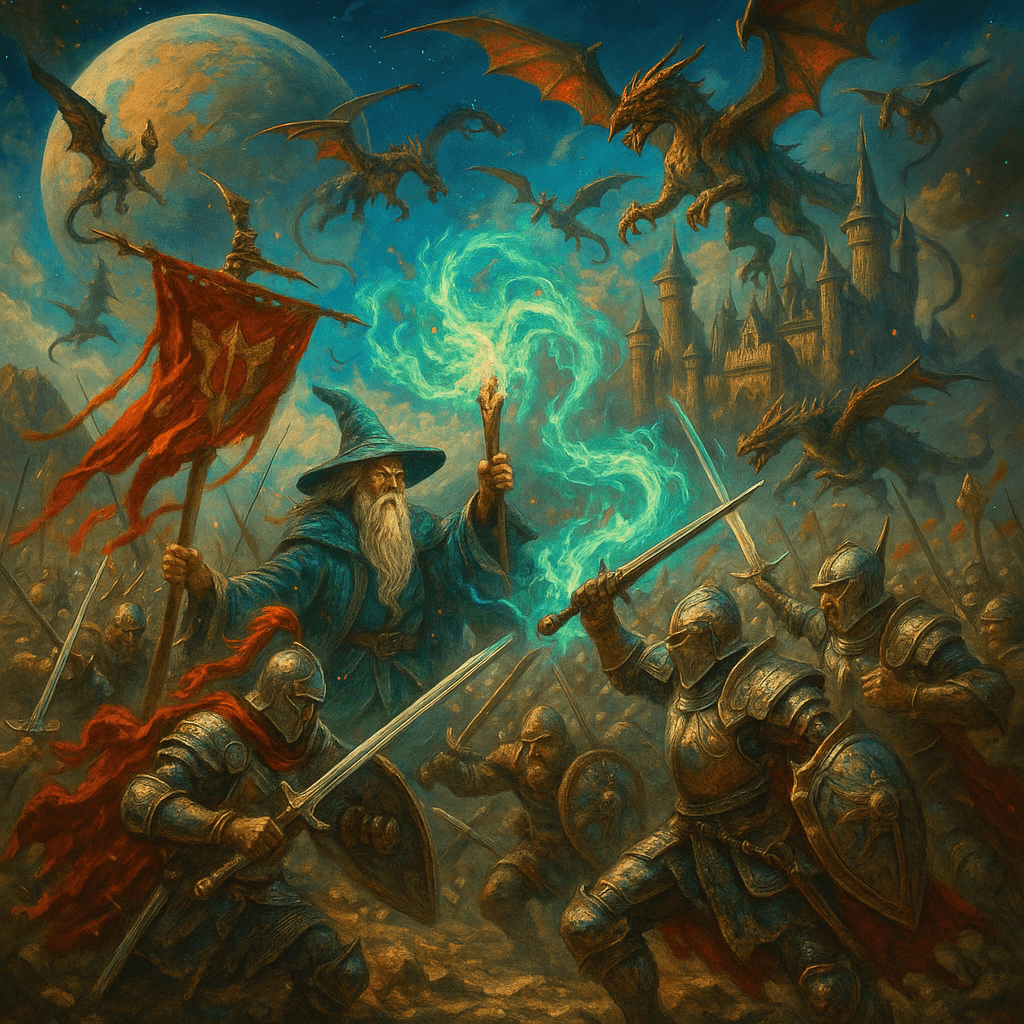
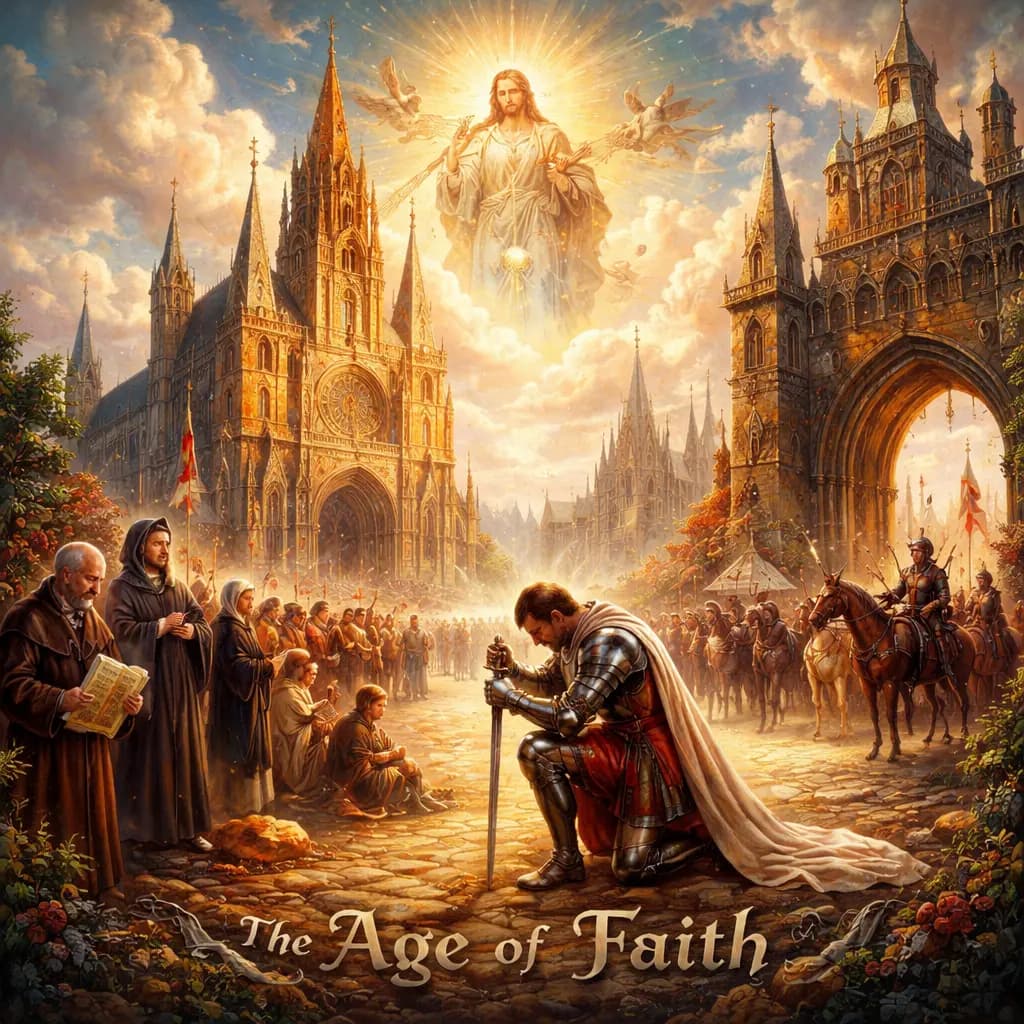
The Crusades represented the climax of medieval events and perhaps the most fascinating episode in the history of Europe and the Near East. After centuries of debate, the two great world religions—Islam and Christianity—finally submitted their dispute to the ultimate human arbitration: the battlefield. All medieval progress, the entire commercial arena of the Christian world, all religious fervor, and the full power of feudalism and the allure of chivalry reached their peak during two hundred years of war fought for the human spirit and commercial interests. The immediate causes included the advance of the Seljuk Turks, the dangerous weakening of the Byzantine Empire, and the ambitions of Italian cities like Pisa, Genoa, Venice, and Amalfi to expand their growing commercial power. Pope Urban II, in a historic speech at the Council of Clermont in 1095, called for a holy war to liberate Jerusalem, promising spiritual rewards and igniting unprecedented enthusiasm across Christendom.
The revival of commerce and industry in the Middle Ages strengthened the economic roots of European civilization. Muslim dominance over the Mediterranean, Viking and Magyar invasions, and the political chaos after Charlemagne had dragged Europe's intellectual and economic life to the depths of degradation in the ninth and tenth centuries. The revival of agricultural organization and feudal lords' support, the taming of Norse sea-raiders into Norman farmers and merchants, the repelling of Hun invasions and their conversion to Christianity, the Italian merchants' recovery of the Mediterranean, the Crusaders' reopening of the Levant, and the West's awakening through contact with more advanced civilizations like Islam and Byzantium in the twelfth century provided opportunity and incentive for Europe's improvement and prepared the material means for the cultural flourishing of the twelfth century and the high medieval peak of the thirteenth. For society and individuals alike, as a Latin proverb says, “Before engaging in philosophy, one must satisfy hunger,” and man first turns to wealth and then to art.
Europe in the late Middle Ages and early modern period underwent profound transformation. The Byzantine Empire, under Alexios I Komnenos and his successors, faced constant threats from Turks, Normans, and the First Crusade but maintained a long reign amid palace intrigues. Anna Komnene, a learned princess, chronicled her father's rule in the Alexiad. John II and Manuel I expanded Byzantine influence through military victories and cultural patronage. The Latin Empire of Constantinople lasted only briefly (1204–1261) before Byzantine restoration. In Armenia, a new kingdom in Cilicia preserved independence for three centuries. Russia suffered under Mongol domination but maintained cultural continuity. The Balkans saw shifting powers among Bulgarians, Serbs, and Hungarians. Germany experienced feudal fragmentation and the rise of the Hanseatic League. Scandinavia advanced with strong monarchies in Denmark, Sweden, and Norway. England consolidated under Alfred and later Norman kings, with feudal and chivalric developments. Christianity in conflict featured monastic reforms and papal struggles. Feudalism and chivalry structured medieval society with obligations between lords and serfs. The Crusades reshaped East-West relations. The economic revolution revived trade, industry, and urban communes, laying foundations for modern Europe.
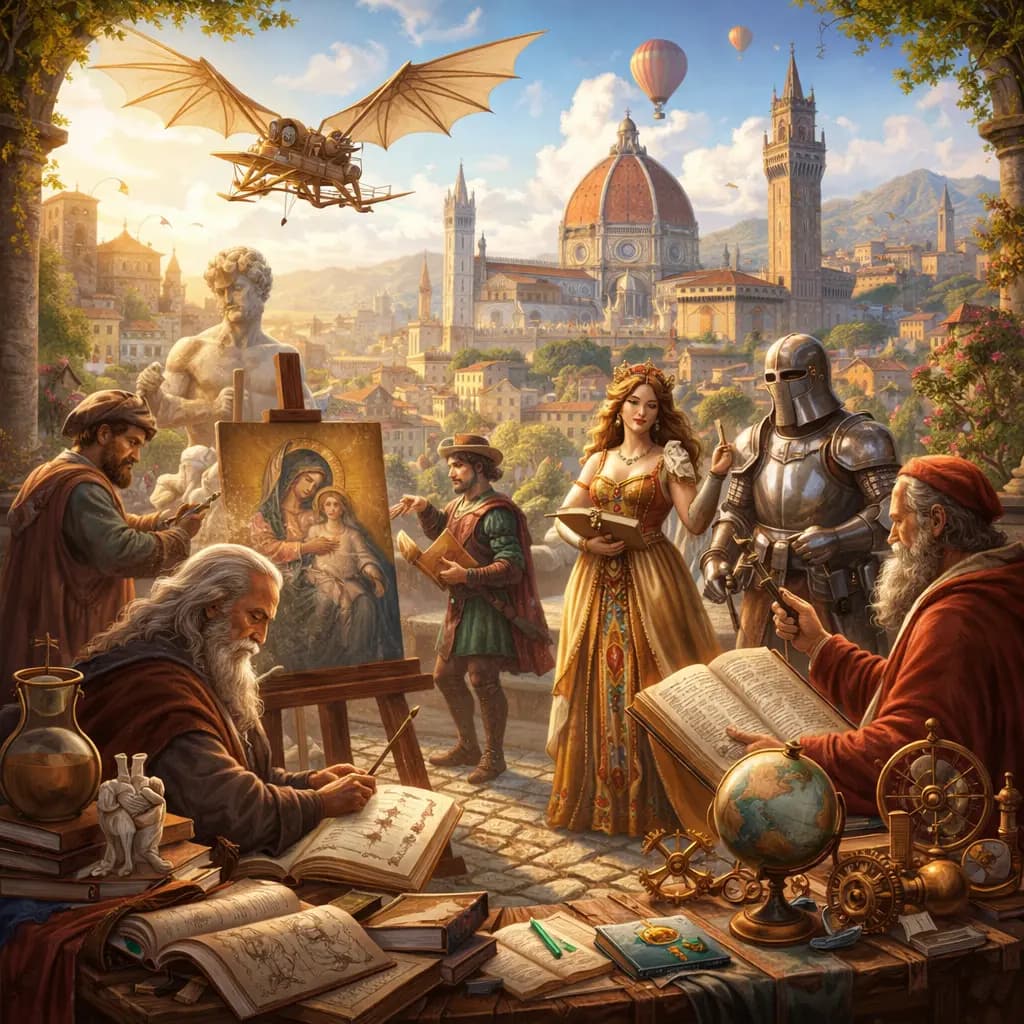
Italy before the Renaissance was marked by complex political, cultural, and economic transformations. Sicily under Norman rule became one of the most advanced and wealthiest regions in Europe, blending Arab, Greek, and Latin elements and creating major commercial centers such as Palermo. The Papal States faced internal and external challenges, with Rome often a scene of conflicts between nobles, the people, and the papal court. Venice achieved supremacy as a commercial power through naval conquests and extensive trade, strengthening its oligarchic political system. The cities of Lombardy and Tuscany, amid internal and external rivalries, laid the groundwork for economic and cultural growth. Frederick II, one of the most enlightened rulers of the age, attempted to unify Italy but ultimately failed, and after his death chaos increased. This era served as a prelude to the emergence of the Renaissance.
The Roman Catholic Church in the High Middle Ages (1095–1294) reached the peak of its spiritual, political, and cultural influence in Western Europe. From the call for the First Crusade by Urban II in 1095 to the death of Celestine V in 1294, the Church shaped faith, law, society, and politics. Popular piety centered on sacraments, saints, Mary, and pilgrimages, while elaborate rituals and canon law governed daily life. The papacy asserted supremacy over secular rulers, clashing with emperors and kings, yet also reformed itself through councils and monastic orders. Clergy wealth and power grew through tithes, lands, and fees, but provoked criticism and calls for reform. This era laid foundations for later crises while preserving and expanding Christian civilization amid Crusades, heresy, and intellectual revival.
The Inquisition in the Middle Ages began in the late twelfth century amid widespread opposition to the clergy and the emergence of heresies such as the Albigensians. These heresies, rooted in Manichaean, Eastern, and anti-clerical ideas opposing Church wealth and rituals, spread in southern France and Italy. The Church initially responded with tolerance and then with legal tools and religious crusades. Gregory IX and his successors organized the Inquisition and dispatched Dominican inquisitors. Torture, forced confessions, and severe punishments including burning alive or lifelong imprisonment were applied. The Inquisition eradicated the Cathar heresy, preserved Church unity, and strengthened French royal power, but it was accompanied by violence and cruelty that ranks among the darkest pages of European history.
The monastic and mendicant orders played a vital role in the survival and reform of the medieval Church. Benedictine monasteries declined in number after the tenth century but maintained influence through agricultural and cultural contributions. New orders such as the Cistercians, founded by Robert of Molesme and revitalized by Stephen Harding and Bernard of Clairvaux, emphasized strict poverty, manual labor, and simplicity. Bernard transformed the Cistercian movement into a powerful spiritual force. Francis of Assisi founded the Franciscans, embracing absolute poverty and preaching to the people, while Dominic established the Dominicans as preachers and teachers. Nunneries mirrored these developments, offering women a life of devotion and service. Mysticism flourished alongside these orders, and the papacy under figures like Boniface VIII faced growing secular challenges. These movements renewed the Church through reform, education, and direct engagement with society.
Christian morality in the Middle Ages sought to temper savage human instincts with divine principles. Original sin of Adam and Eve served as justification for human suffering, and the seven deadly sins and seven virtues were defined. Marriage, family, and sexual relations were placed under strict Church supervision, yet adultery and prostitution remained widespread. Clothing, food, sports, and social entertainments reflected class differences, but daily life was filled with joy, festivals, and local customs. Despite its flaws, the Church played a major role in reducing violence, expanding charity, and creating moral unity, although the practice of ethical principles often lagged behind social reality.
Western Europe in the twelfth and thirteenth centuries reached a peak of artistic achievement comparable to Periclean Athens and Augustan Rome. The defeat of Norse and Muslim invasions, the pacification of the Hungarians, and the stimulus of the Crusades brought Byzantine and Islamic artistic ideas and forms to Europe. The reopening of the Mediterranean, the expansion of Atlantic trade, secure river and sea commerce, and the growth of industry and finance created wealth unmatched since Constantine. New prosperous classes emerged capable of supporting art, and affluent communities resolved to build cathedrals far more magnificent than before. The Church, once fearful of art, now saw it as a powerful means to instruct the illiterate masses and inspire devotion. Monks preserved ancient techniques, while lay artists, freed from monastic schools, developed the Gothic style. Sculpture, painting, mosaics, stained glass, metalwork, ivory carving, and textile arts all flourished, blending classical, Byzantine, and Islamic influences with fresh Western vitality.
Western Europe in the twelfth and thirteenth centuries reached a peak of artistic achievement comparable to Periclean Athens and Augustan Rome. The defeat of Norse and Muslim invasions, the pacification of the Hungarians, and the stimulus of the Crusades brought Byzantine and Islamic artistic ideas and forms to Europe. The reopening of the Mediterranean, the expansion of Atlantic trade, secure river and sea commerce, and the growth of industry and finance created wealth unmatched since Constantine. New prosperous classes emerged capable of supporting art, and affluent communities resolved to build cathedrals far more magnificent than before. The Church, once fearful of art, now saw it as a powerful means to instruct the illiterate masses and inspire devotion. Monks preserved ancient techniques, while lay artists, freed from monastic schools, developed the Gothic style. Sculpture, painting, mosaics, stained glass, metalwork, ivory carving, and textile arts all flourished, blending classical, Byzantine, and Islamic influences with fresh Western vitality.
The extraordinary flowering of philosophy that began with Anselm, Roscelin, and Abelard and reached its zenith with Albertus Magnus and Saint Thomas Aquinas can be explained by a combination of causes. The Greek East had never lost its ancient heritage; works of the classical philosophers continued to be studied in Constantinople, Antioch, and Alexandria. Greek teachers and manuscripts gradually entered the West. Waves of translations from Arabic and Greek in the twelfth and thirteenth centuries opened the door to the inspiring and challenging ideas of Greek and Muslim philosophers. The economic revival through land reclamation, expansion of trade and industry, and accumulation of wealth laid the foundation for the “twelfth-century Renaissance.” Schools and universities arose, and the scholastic method developed. At Chartres, philosophy was combined with literature, and Plato was especially honored. The movement later centered in Paris, where Aristotle’s works arrived in Latin translations. The Church initially resisted but eventually absorbed Aristotelian thought. Free-thinkers and Averroists challenged orthodoxy, leading to a great intellectual battle. Thomas Aquinas produced the most comprehensive synthesis of reason and faith in the Summa Theologica. His successors, including Duns Scotus, marked the beginning of the decline of the scholastic enterprise.
Between 1095 and 1300, Christian Europe existed in an environment filled with superstition, magic, demons, and astrology. Despite this magical atmosphere, the transfer of knowledge from the Islamic world and the translation of Greek and Arabic works led to a scientific awakening. Advances occurred in mathematics with Fibonacci, mechanics, astronomy, medicine, and surgery, while scholars like Albertus Magnus and Roger Bacon played key roles.