Revisiting Epochs and Ideologies

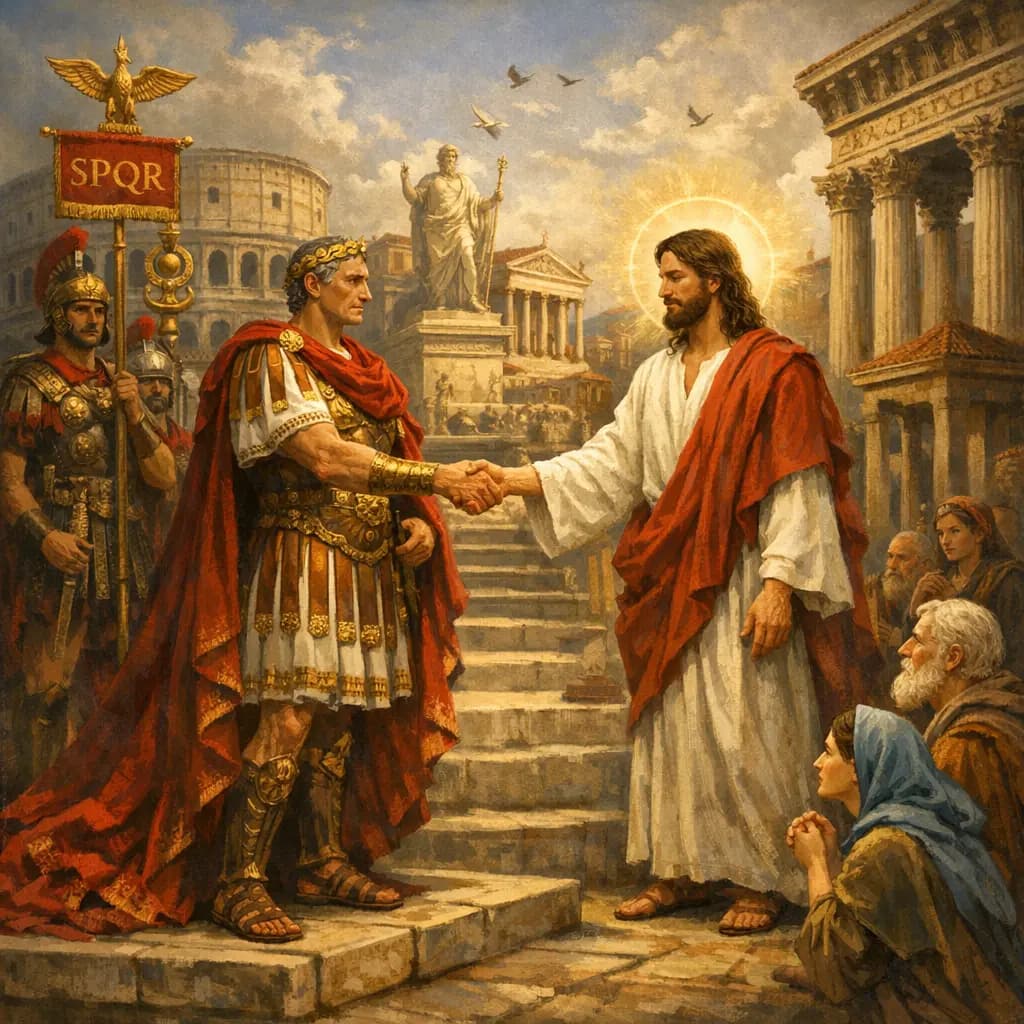
Will Durant examines the life of Jesus within the turbulent context of Roman Judea. Following the short-lived independence of the Hasmoneans and the rule of Herod the Great, Jewish revolts against Roman procurators intensified. The Great Revolt of 66–70 AD ended with the siege and destruction of Jerusalem and Herod’s Temple by Titus. The final revolt under Hadrian (132–135 AD), led by Simon Bar Kokhba with the support of Rabbi Akiva, was brutally suppressed. These catastrophes resulted in the widespread dispersion of the Jews (the Diaspora), the dissolution of the Sanhedrin, and the end of Judean independence. Durant also addresses the historical existence of Jesus, the sources (Josephus, Tacitus, Suetonius, and the Gospels), his formative years, ministry, ethical teachings centered on the imminent Kingdom of God, and his crucifixion under Pontius Pilate. The narrative shows how Jesus’ message transformed Jewish expectations into a universal ethical vision that profoundly shaped Western civilization.
Will Durant traces the growth of early Christianity from small house gatherings to an organized institution spanning the Roman Empire. Christians formed communities modeled on synagogues, welcoming slaves and the poor while emphasizing moral discipline, charity, and the imminent Kingdom of God. Women played supportive roles but were expected to observe modesty and obedience. The Church developed sacraments, a calendar of feasts, and a rich liturgy blending Jewish, Greek, and Roman elements. Philosophical defenses by Justin Martyr, Tertullian, Origen, and others countered pagan critics like Celsus. Despite internal heresies (Gnosticism, Marcionism, Montanism, Manichaeism) and sporadic persecutions, the Church strengthened its organization through councils, a canon of Scripture, and the rising authority of the Bishop of Rome. By the early fourth century, Christianity had become a powerful, unified force capable of challenging the declining pagan order.
Will Durant traces the fall of the Roman Empire from the death of Commodus to the age of Diocletian. After Commodus’s assassination, the Senate chose Pertinax as emperor, but he was killed by the Praetorian Guard. Julianus bought the throne, but Septimius Severus with the Pannonian legions overthrew him and began a Semitic dynasty. Severus and his son Caracalla transformed the empire into a hereditary military monarchy. After intense chaos, Diocletian divided the empire into four parts, carried out administrative, economic, and military reforms, established a planned economy, controlled prices, and founded an Eastern-style monarchy. This period witnessed economic decline, rising taxation, the serfdom of peasants, and the weakening of urban life, but Diocletian saved the empire from collapse.
Will Durant describes the final conflict between the Christian Church and the Roman state, followed by the rise of Constantine and the victory of Christianity. After decades of sporadic persecutions, Diocletian and Galerius launched the last great assault on the Church in 303, destroying churches, burning books, and executing resisters. The persecutions failed; the steadfastness of the martyrs strengthened the faith. Constantine, after defeating Maxentius at the Milvian Bridge in 312 under the sign of the Cross, issued the Edict of Milan with Licinius, granting religious tolerance. In 325 he convened the Council of Nicaea, which affirmed the divinity of Christ and established the orthodox creed. Constantine became the first Christian emperor, moved the capital to Constantinople, supported the Church, and helped transform Christianity from a persecuted sect into the dominant religion of the empire, laying the foundations of medieval civilization.
Will Durant recounts the last major attempt to revive paganism in the Roman Empire through Julian, nephew of Constantine. After Constantine's death, the empire was divided among his sons, leading to civil war. Julian, raised as a Christian, turned to paganism in his youth. Appointed Caesar of Gaul, he defeated the Germans and restored the province. In 360 he was proclaimed emperor and sought to restore paganism: reopening temples, cutting state support for the Church, and organizing a "church" of paganism. He waged war against Persia but was killed in 363. His death ended the final serious effort to restore the old religion and accelerated Christianity's complete victory.
A detailed examination of the internal and external factors that led to the fall of the Western Roman Empire between 325 and 476 AD. This article analyzes the threatened borders, the role of barbarian invasions by Goths, Vandals, and Huns, the efforts of saving emperors, the economic and social decline of Italy, and the successive sacks of Rome, based on Will Durant’s historical narrative.
A comprehensive historical analysis of the rise and consolidation of Christianity from 364 to 451 AD, covering the remarkable organization of the Church, major heresies, the role of key Church Fathers in the West and East, the profound influence of Saint Augustine, and how Christianity shaped morality, society, and culture during the declining Western Roman Empire.
A comprehensive historical analysis of how Europe began to take shape during the transition from the Western Roman Empire to the Middle Ages, from 325 to 529 AD. This article examines the transformation of Britain into England, the situation in Ireland, the prelude to France with the Franks and the Merovingian dynasty, Visigothic Spain, and Ostrogothic Italy under Theodoric and Boethius, showing how barbarian invasions, Christianity, and new institutions laid the foundations of medieval European civilization.
A comprehensive historical examination of the reign of Emperor Justinian I from 527 to 565 AD, covering his efforts to restore the Roman Empire, his major wars of reconquest led by Belisarius, the codification of Roman law, his theological controversies, the influence of Empress Theodora, and the long-term consequences of his ambitious policies on the Byzantine Empire and medieval Europe.
A comprehensive examination of Byzantine civilization from 326 to 565 AD, covering its dynamic economy blending private investment, state oversight, and nationalized industries; advances in science and philosophy; historical and religious literature; and the flourishing of Byzantine art in architecture, mosaics, illumination, music, and crafts. The article shows how Byzantium, by preserving Roman heritage and absorbing Eastern elements, laid the foundations of medieval European and Middle Eastern civilization.
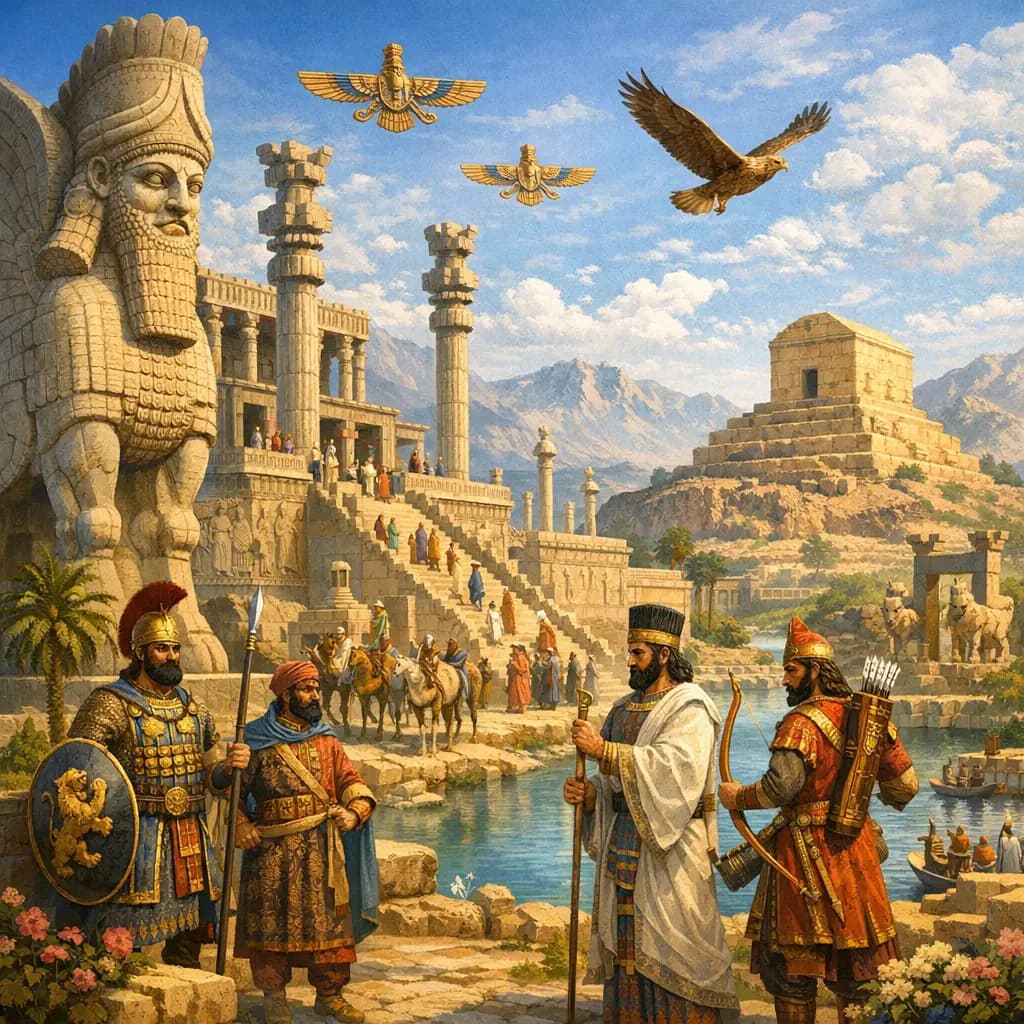
A comprehensive study of the Sassanid Empire from 224 to 641 AD, covering its society, culture, economy, religion, kingship, art, and the dramatic fall to the Arab conquest. The article explores how the Sassanids revived Persian glory after the Parthians, restored Zoroastrianism, created a powerful centralized state, fostered remarkable art and scholarship, and ultimately succumbed to internal weaknesses and the rising force of Islam, leaving a lasting legacy on Iranian and Islamic civilization.
A comprehensive examination of the life of Prophet Muhammad (PBUH) from 570 to 632 AD, covering his childhood and youth in Mecca, the beginning of revelation and preaching, the Hijra to Medina, the establishment of the Islamic state, wars and peaces, the conquest of Mecca, and the final years of his life. The article shows how the Prophet (PBUH) transformed from an orphaned poor boy into the leader of a united nation, founded Islam, revolutionized Arab ethics and culture, and left an eternal legacy for humanity.