Revisiting Epochs and Ideologies

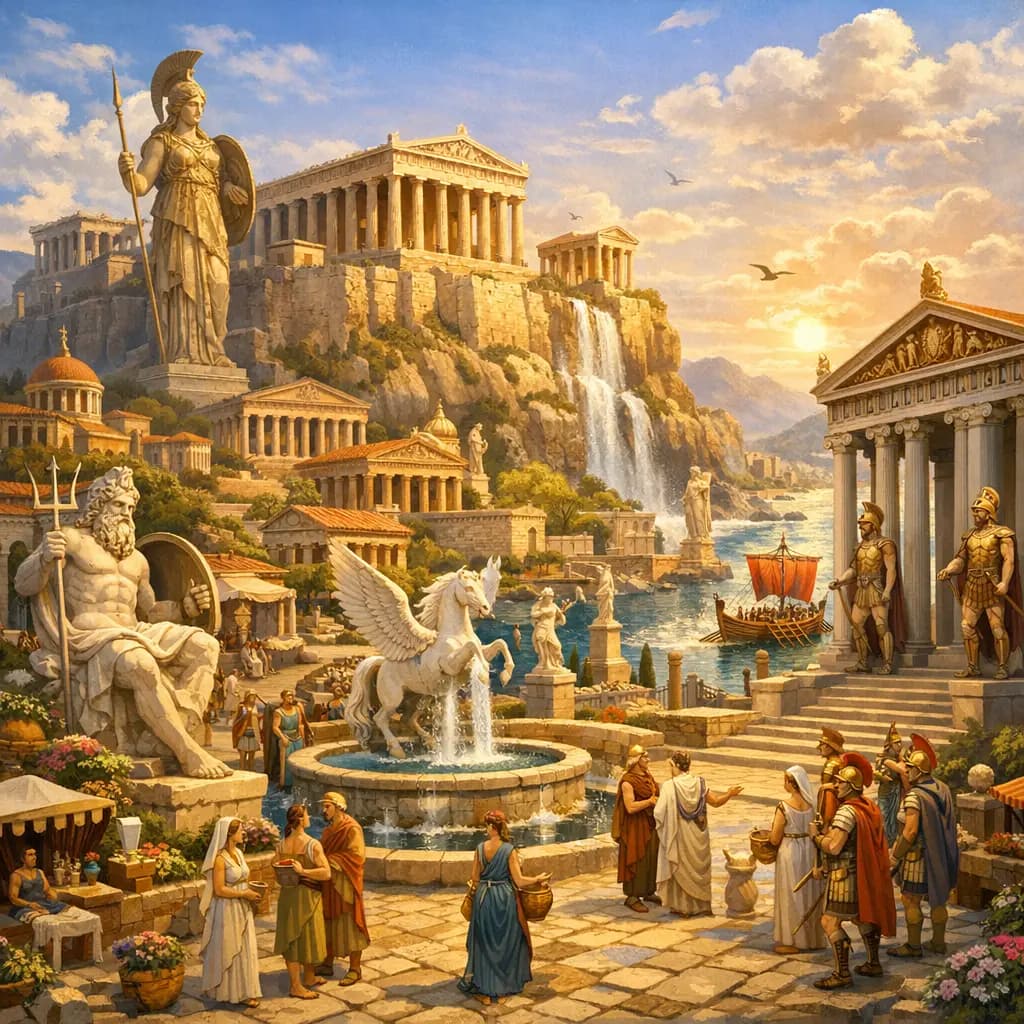
Ancient Greek religion was a complex system built on three pillars: chthonic (earth) gods, Olympian gods, and mystical rites. These beliefs shaped Greek culture, politics, art, and daily life. From the Eleusinian Mysteries to sacrificial rituals, oracles, festivals, and moral teachings, Greek religion blended myth, philosophy, and communal identity into one of the most influential spiritual systems of the ancient world.
In ancient Greece, sports were not merely physical activities but a central part of cultural, religious, and philosophical life. The Olympic Games, gymnasiums, athletic arts, music, dance, and architecture together shaped a civilization that valued beauty, harmony of body and soul, freedom, and noble competition. This article provides a comprehensive overview of the role of sports in Greek culture and civilization.
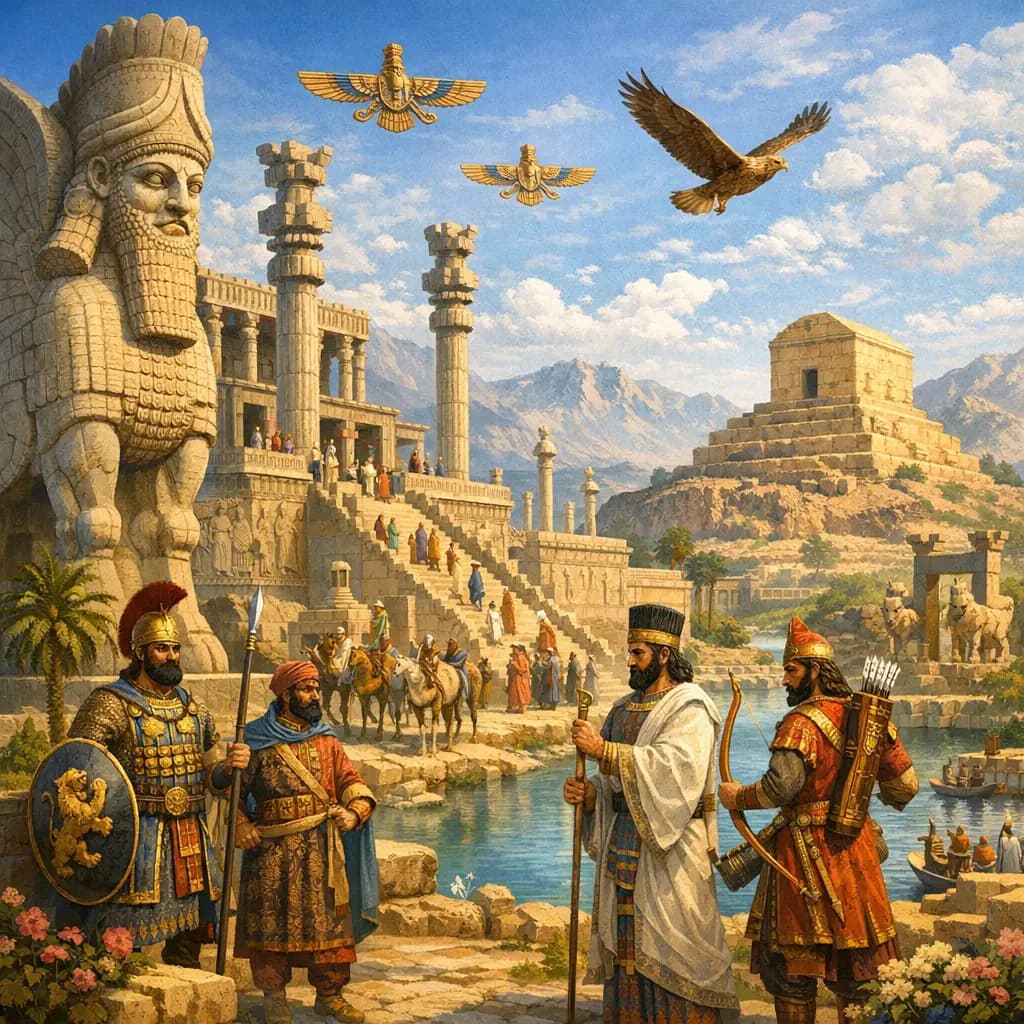
This article examines phase of the Greco-Persian Wars, focusing on the rise of Persian power under Darius and Xerxes, the Ionian Revolt, the battles of Marathon, Salamis, and Plataea, and the role of key Greek leaders such as Aristides and Themistocles. Drawing from classical sources—especially Herodotus—it analyzes the political, military, and cultural consequences of these conflicts for both Greece and the Achaemenid Empire.
Athenian democracy reached its most radical and influential form in the 5th century BCE, especially under the leadership of Pericles. Following the decline of aristocratic power and the reforms of Ephialtes, Pericles transformed Athens into a model of direct democracy. Through payments for civic participation, cultural patronage, naval expansion, and institutional restructuring, he shaped the political and cultural identity of Classical Athens. Despite its limitations—excluding women, slaves, and foreigners—Athenian democracy became a foundational model for later political thought.
This article provides a comprehensive overview of economic, social, and cultural life in Classical Athens during the 5th century BCE. It examines agriculture, slavery, trade, social classes, family structure, education, daily life, clothing, beauty practices, and moral values. This period—known as the Golden Age of Athens—represents the height of Greek cultural, artistic, and economic development.
This article presents a comprehensive overview of art, aesthetics, mathematics, science, and medicine in Classical Greece during the 5th century BCE—the Golden Age of Athens. Greek art emphasized order, proportion, clarity, and the ideal human form. Mathematics and science emerged from philosophy and gradually moved away from mythological explanations. Medicine, led by Hippocrates, shifted from religious healing to rational, observational practice. Together, these developments laid the foundations of classical art, scientific reasoning, and ethical medicine.
This article explores the development of philosophical thought in Ancient Greece, tracing its path from the Presocratic thinkers to the Classical era of Socrates, Plato, and Aristotle. It examines early inquiries into reality, change, unity, and motion, the intellectual crisis following major wars, and the rise of Socratic ethics and dialectics. The contributions of Plato, Aristotle, and other thinkers are analyzed to show how Greek philosophy transitioned from myth to rational inquiry and laid the foundation for Western philosophical tradition.
This article examines the transformation of Greek culture from the Classical period to the Hellenistic age following Alexander the Great. It explores how poetry, drama, philosophy, and artistic expression shifted from collective, philosophical, and mythic foundations toward more personal, emotional, and everyday themes. The works of major tragedians and comedians such as Aeschylus, Sophocles, Euripides, and Aristophanes are highlighted, along with the broader cultural evolution that shaped Western literature and art.
This article examines the Golden Age of Athens in the fifth century BCE and its subsequent decline during the Peloponnesian War. It explains how Pericles transformed Athens into a naval empire and cultural center, then analyzes the causes of the war, the internal crises after Pericles’ death, the disastrous Sicilian Expedition, Persian support for Sparta, and the final defeat of Athens in 404 BCE. The narrative shows how unprecedented Athenian prosperity ultimately collapsed under political ambition, economic pressure, plague, and strategic miscalculations.
This article examines the life and political influence of Alcibiades, the ambitious and controversial Athenian statesman whose actions shaped the course of the Peloponnesian War. From his charismatic rise in Athenian politics to his role in the disastrous Sicilian Expedition, his shifting alliances with Sparta and Persia, his temporary return to Athens, and his final downfall, Alcibiades remains one of the most complex figures of classical Greece. The article also explores the collapse of Athenian democracy, the rule of the Thirty Tyrants, and the political climate that led to the trial and death of Socrates.
This article explores the rise and rapid fall of Sparta after its victory in the Peloponnesian War in 404 BCE. Although Sparta briefly became the dominant power in Greece, its rule was undermined by corruption, dependence on Persian money, harsh foreign policies, demographic decline, and strategic failures. From the era of Lysander and Agesilaus to the Corinthian War, the King's Peace, the rise of Thebes, and the decisive Battle of Leuctra, the article shows how Sparta’s rigid social system and inflexible politics led to its collapse. Ultimately, Sparta’s short-lived hegemony demonstrates that military strength alone cannot sustain an empire without social stability and political adaptability.
This article explores how Philip II, father of Alexander the Great, transformed Macedonia from a backward and fragmented kingdom into the dominant military and political power of Greece. Through innovative military reforms, strategic diplomacy, calculated warfare, and the creation of the League of Corinth, Philip unified the Greek world under Macedonian leadership. His achievements laid the foundation for the vast empire that Alexander would later build. The article shows how one ambitious and brilliant ruler reshaped the course of Greek and world history.